

Choosing wood garage door stain options is part of the architecture, not an afterthought. On a custom wood garage door, stain changes how the grain reads from the street and how the door relates to siding and trim. It can make the exterior feel warm, modern, rustic, or refined. The best choice depends on the wood, color depth, surrounding materials, and the amount of grain you want to keep visible. For the larger material and style decision, see Craft Global's Custom Wood and Steel Garage Doors: Selection, Style, and Value guide.
Discuss your custom wood garage door stain options with Craft Global
The best wood garage door stain options balance cedar's character with the home's exterior. Choose semi-transparent stain for visible grain, or semi-solid stain for stronger color coordination. Craft Global offers more than 15 finish choices, from Natural and Aspen to Dark Bark, Black Walnut, and Wenge.
Why the Right Stain Transforms a Wood Garage Door
Craft Global uses finish as part of the design specification for its custom wood garage doors. The right stain supports the door's panel layout, wood character, glass, hardware, and the architecture around it. A lighter finish can keep a broad door understated, while a deeper tone can give the same proportions more visual weight.
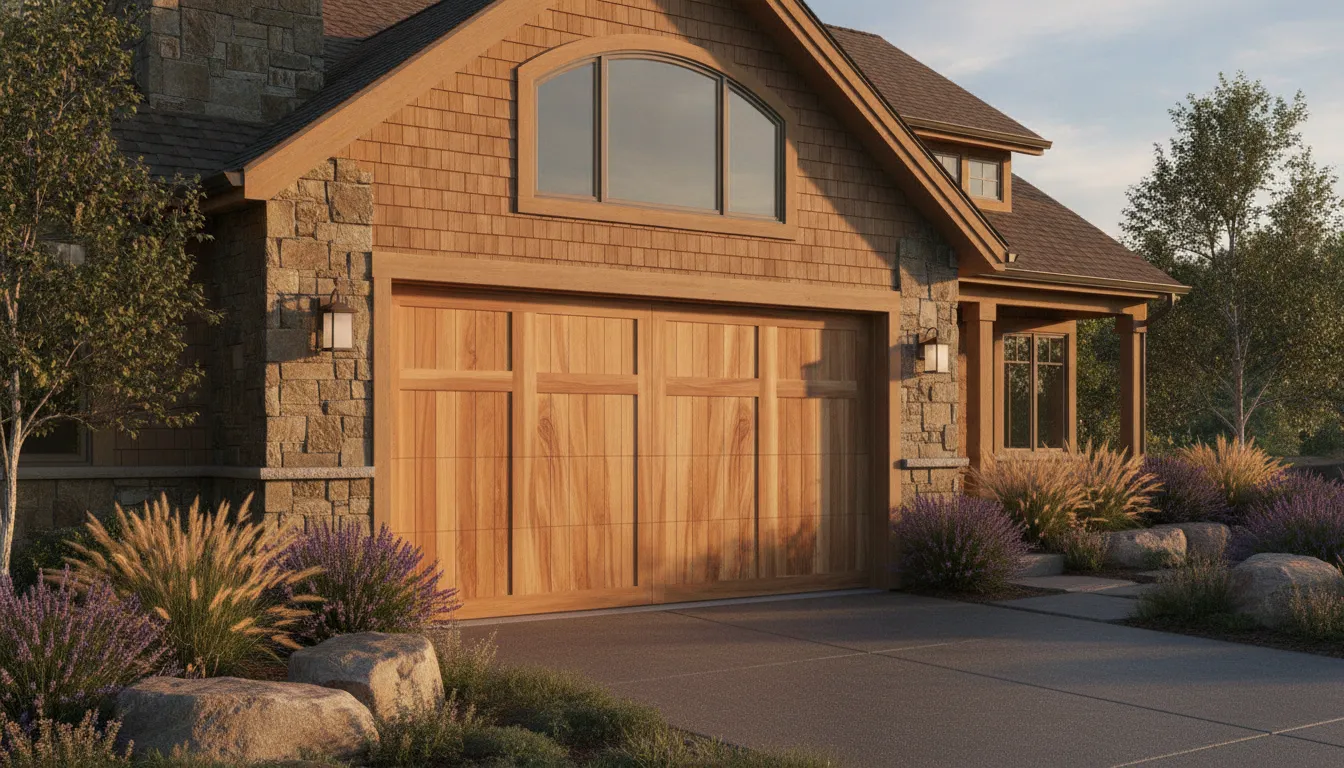
Grain visibility and color depth
Semi-transparent stain leaves more natural color variation and grain visible. It is a strong fit when the wood itself is central to the design. Semi-solid stain adds more pigment and creates a more even color while preserving selected grain and texture. Solid stain offers the most uniform appearance of the stain family when color consistency matters more than showing every feature of the wood.
Opacity is a design decision, not a measure of quality. A pale semi-transparent finish may suit a calm contemporary facade. A dark semi-solid finish may support traditional trim, masonry, or black hardware. The best finish serves the entire exterior rather than competing with it.
Why samples need to be viewed in changing light
A small color chip cannot show every way a finish will appear on a wide exterior door. Morning light, afternoon shade, porch lighting, siding color, and landscaping affect perception. Review samples beside the home's actual materials when possible. Check them from the street as well as close up, because a tone that looks subtle at arm's length may read stronger across a garage opening.
Which Wood Garage Door Stain Options Work Best on Cedar?
For a cedar garage door, Craft Global recommends starting with an exterior-grade finish selected for the wood species and exposure, then choosing opacity based on the desired appearance. Semi-transparent finishes emphasize grain, while semi-solid finishes provide more color control. Surface preparation, application, climate, orientation, and any existing finish still determine performance.
| Finish approach | Visual result | Best fit | Planning note |
|---|---|---|---|
| Clear sealer | Shows the cedar's natural tone and grain with minimal added color. | Light exteriors where natural wood is the main feature. | Weathering and color change remain easy to see. |
| Semi-transparent stain | Adds color while preserving strong grain visibility and variation. | Projects that want visible cedar with more control over tone. | Test on the same species and preparation used on the door. |
| Semi-solid stain | Creates fuller, more consistent color while retaining selected grain. | Homes needing stronger coordination with trim, siding, or masonry. | More pigment does not replace compatible preparation. |
| Solid stain | Produces a more uniform, opaque color with surface texture remaining possible. | Designs that prioritize a consistent color statement. | Verify coating compatibility and preparation requirements. |
Natural tones versus dark stains
Natural tones such as Pearl Gray, Natural, Aspen, Driftwood, and Desert Sand keep a door visually light. They can complement pale siding, natural stone, white trim, and modern landscapes. Darker choices such as Dark Bark, Black Walnut, Canyon Brown, Dark Mahogany, Slate B, Teak, Timberline, Walnut, and Wenge create more contrast and can reinforce dark roofing, brick, or traditional hardware.
Dark stain does not automatically last longer than a natural stain. Service life depends on the finish system, preparation, application, exposure, and the amount of weathering an owner will accept before refreshing the surface. Darker color can make fading more noticeable, while pale finishes may show dirt or weathering differently. Choose for the desired appearance and maintenance plan, not a promise that one color family is maintenance-free.
For broader exterior-finishing context, Purdue Extension's guidance on exterior wood finishing explains why species, grain direction, surface smoothness, finish selection, and application procedure affect performance.
How to Match Wood Garage Door Stain Options to Your Home Exterior
The most successful wood garage door stain options coordinate undertones and contrast instead of forcing the door to duplicate one nearby color. Craft Global evaluates the door alongside siding, trim, roofing, masonry, landscape, glass, and hardware. Start with the largest exterior surfaces, then use smaller details to refine the finish direction.
Use siding and trim as the first reference
Siding establishes the broad color field. On a light exterior, Pearl Gray, Natural, Aspen, Desert Sand, or a warm mid-tone can keep the facade balanced. On darker siding, Driftwood, Sierra, Walnut, or Canyon Brown can add warmth while maintaining separation from the wall. Warm white or cream trim can support golden and brown undertones. Cooler gray trim can support Pearl Gray, Slate B, or weathered Driftwood.
Exact matching is rarely necessary. Repeating a subtle undertone often looks more intentional than making the door disappear into the siding. If the siding is highly textured or visually busy, a calmer finish gives the eye a place to rest. If the facade is simple, a richer stain can provide depth.
Consider roofing, masonry, and landscape
The roof is a large visual plane, even when it is above eye level. A charcoal roof may support Black Walnut, Dark Bark, Wenge, or Slate B. Warm brown or copper notes may pair more comfortably with Natural, Aspen, Teak, or a medium brown. Brick, stone, mature trees, and planting introduce additional colors that can make a stain appear warmer or cooler throughout the day.
Coordinate style, glass, and hardware
Traditional carriage-house detailing often supports a richer brown or dark stain with black decorative hardware. Broad modern panels and restrained glazing may suit Pearl Gray, Slate B, Driftwood, or Natural. Clear, frosted, tinted, and obscure glass each change contrast across the door. Straps, hinges, clavos, and handles add another layer when they are intended to stand out.
Review the finish with the selected model rather than separately. Craft Global's Modern Landscape garage door collection offers a contemporary reference point, while the Wood Overhead Garage Doors collection shows additional model and configuration options.
Clear Sealers or Solid Stains for Western Red Cedar?
Clear sealers preserve the most natural cedar appearance, while solid stains provide the strongest color consistency. Craft Global's semi-transparent and semi-solid options sit between those extremes. For Western Red Cedar, decide how much grain should remain visible. Then consider how closely the door must coordinate with the exterior and how the surface will be prepared and maintained.
| Question | Clear sealer | Semi-transparent or semi-solid | Solid stain |
|---|---|---|---|
| How much grain shows? | Nearly all natural grain and color variation. | Strong to moderate grain, depending on pigment. | Less grain emphasis, with surface texture still possible. |
| How even is the color? | Least uniform because cedar variation remains prominent. | Balanced color with some natural variation. | Most uniform of the stain options. |
| When is it useful? | When authentic, pale cedar is the desired look. | When color coordination and wood character both matter. | When a consistent color statement is the priority. |
| What should be verified? | How natural weathering will look on the exposed door. | Sample color, opacity, preparation, and exposure. | Coating compatibility and how worn areas will be refreshed. |
Why preparation matters as much as color
Finish performance is not determined by the label on the container alone. Cedar boards can present different grain directions across rails, stiles, panels, and trim. Dirt, uneven areas, peeling material, or an incompatible product can undermine the result regardless of the chosen color.
For a new door, ask the manufacturer or qualified finisher to approve the system and sample. For a previously finished door, do not assume a new stain can be applied directly over the existing surface. The old material may need evaluation, removal, or compatibility testing before recoating.
Also consider how the door will be seen throughout the year. A sheltered entry may keep its appearance longer than a door facing strong sun and driving rain. The same finish can age differently on shaded and exposed elevations. Ask what inspection interval makes sense for the location, and decide in advance how much natural weathering fits the home's character. This planning makes the final finish easier to maintain.
Use Craft Global's wood door options page to compare available stain, glass, and decorative hardware directions before finalizing the design.
How Does Craft Global Handle Custom Stain Selection?
Craft Global treats stain as part of the custom door specification, connecting wood, finish, glass, hardware, proportions, and the surrounding exterior before fabrication. The process gives homeowners, builders, installers, and distributors a practical way to compare finish directions without reducing the decision to a color name.
For builders and installers, this approach also keeps finish decisions tied to the opening and the complete order. Confirming the model, wood, glazing, hardware, and finish together reduces the risk of choosing a color that looks right in isolation but conflicts with the finished facade. Homeowners can bring siding or trim samples to the discussion and ask which finish direction best supports the existing materials. The goal is a coordinated door specification, not a guess based on a small color chip.
- Define the material and conditions. Confirm Western Red Cedar or another approved construction, then discuss exposure, orientation, operating configuration, and the existing exterior.
- Choose a finish direction. Review the 15-plus semi-transparent and semi-solid choices, starting with light natural, warm brown, weathered gray, or deep contrast.
- Review samples in context. Place samples near siding, trim, roof materials, masonry, and landscaping. Check changing light and the viewing distance that matters most.
- Coordinate glass and hardware. Select clear, frosted, tinted, or obscure glass and review decorative hardware alongside the stain.
- Approve the complete design. Use the shop-drawing process to confirm the model, opening proportions, panels, windows, hardware, and finish before fabrication.
For the broader relationship between styles, materials, glass, hardware, and value, return to Craft Global's Custom Wood and Steel Garage Doors: Selection, Style, and Value. The finish decision is strongest when it is made as part of that larger specification rather than after the door has already been designed.
Request a finish recommendation and custom door quote from Craft Global
Frequently Asked Questions
What type of stain is best for a cedar garage door?
An exterior-grade penetrating or semi-transparent stain is a common starting point because it can add color while keeping grain visible. The best system depends on wood, preparation, exposure, application, and desired appearance. Test the selected finish on the same material before approving the full door.
Do dark wood garage door stain options last longer?
Not necessarily. A dark stain does not guarantee longer service life than a natural or mid-tone stain. Finish performance depends on compatibility, preparation, application, weather exposure, and maintenance. Choose dark or natural tones for the look you want, then plan inspection and refreshing based on actual wear.
Should I stain or paint a wood garage door?
Choose stain when cedar grain and natural variation should remain part of the design. Choose paint or a solid-color system when a more uniform color matters more than visible grain. Craft Global can review the desired exterior relationship and available finish direction before the specification is finalized.
How do I choose a stain color for my garage door?
Begin with siding, trim, roof, masonry, and landscape colors. Compare samples beside the home in morning and afternoon light. Light finishes can keep a contemporary facade calm, while medium and dark finishes can add warmth or contrast. Review the sample with the door's glass and hardware.
Can I use gel stain on a genuine cedar garage door?
Gel stain is common in some interior or faux-wood applications, but it is not automatically the right system for a genuine cedar exterior door. Use a finish intended for exterior wood and confirm compatibility with the manufacturer or qualified finisher. Evaluate surface condition and existing coating before recoating.